An elbow during a football match. A fall down the stairs. An olive that still had its stone in it. It always happens faster than you can think, and then you are standing there with a piece of tooth in your hand.
What you do in the first ten minutes often decides whether the tooth can still be saved. So here is the important part first, and the explanation after that.
The short answer
Whole tooth out, permanent tooth: pick it up by the crown, not by the root. Rinse it for no more than ten seconds under cold running water. Put it back in the socket if you can. If that does not work, keep it in milk, or inside your own cheek. Call straight away.
A piece broken off: keep the fragment, even a small one. Rinse your mouth with lukewarm water. Call the same day.
Baby tooth out: do not put it back. That can damage the permanent tooth developing underneath. Do have it checked.
With a knocked-out permanent tooth every minute counts. Within half an hour the chance of saving it is greatest, and after an hour lying dry that chance becomes small.
Why milk, and not water?
This is the mistake that gets made most often, and it is an understandable one.
On the root of a tooth sits a thin layer of living cells. Those cells are what allow the tooth to reattach to the jaw. They only survive in a liquid with roughly the same salt concentration as the body.
Tap water does not have that concentration. The cells swell up and die, often within minutes. Milk comes close, and so does saliva. That is why the patient’s own cheek is a perfectly good place to keep it, as long as they are conscious and not at risk of swallowing it.
So: milk, saliva or saline. Never water, and never dry in a tissue.
What you should definitely not do
- Scrub the root clean. Rinsing dirt off is fine, scrubbing is not. You would be scrubbing away exactly the cells that matter
- Wrap the tooth in a tissue or handkerchief. Dry is the worst thing there is
- Wait until tomorrow to see whether it settles down. With a knocked-out tooth, that wait costs you the tooth
- Stick something back yourself with glue or chewing gum
- Put aspirin on the gum. It does nothing for the pain and it does cause a burn on the soft tissue
And if it is only a chip?
That happens more often than a whole tooth, and it usually ends well.
A small flake of enamel without pain is rarely urgent. Have it looked at at the next opportunity, because a sharp edge will damage your tongue or cheek.
A larger piece, with sensitivity to cold or sweet, means the dentine underneath is exposed. You want that covered within a few days, otherwise the nerve becomes irritated.
A break where you can see a pink or red dot is the nerve itself. That one is urgent, because an infection can follow quickly.
Keep the broken piece either way. Sometimes it can be bonded back, and otherwise it tells us something about shape and colour.
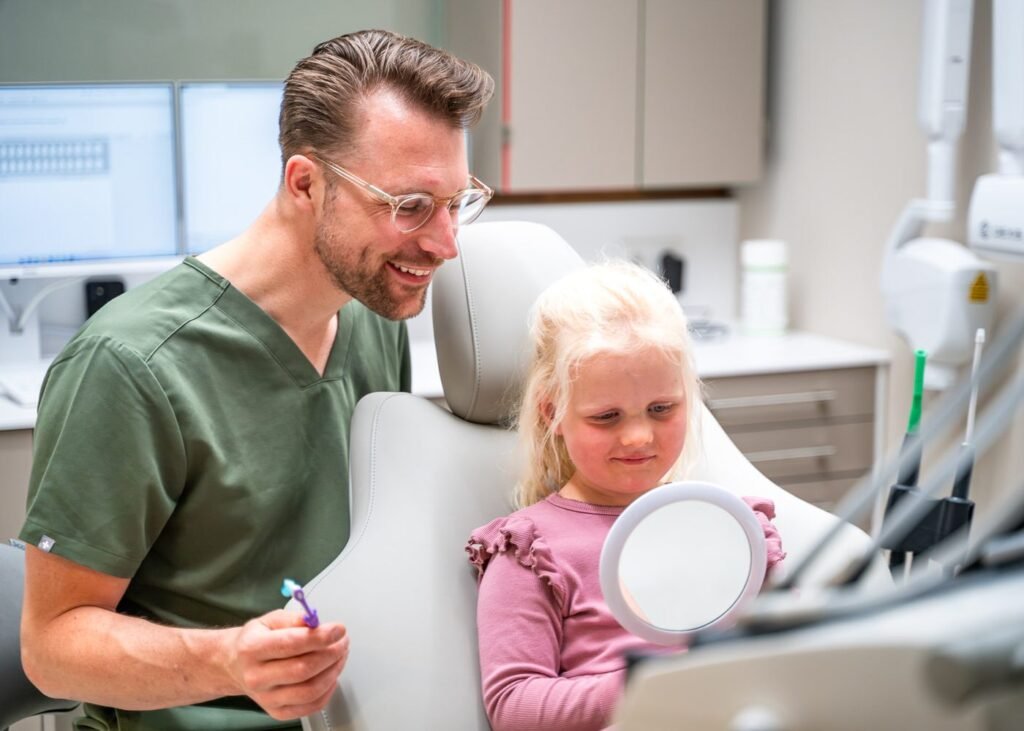
What about children?
With children it is usually the front teeth, and usually after a fall.
With a baby tooth, a knocked-out tooth is not put back. The permanent tooth is developing right underneath it, and replacing it can damage that one. Do have it looked at, because a knock can affect the successor too.
With a permanent tooth the same rules apply as for adults: milk, quickly, call.
With children, also watch the days that follow. A tooth that slowly darkens after an accident is telling you the nerve did not survive. That is not always urgent, but it does need to be seen.
Who do you call, and when?
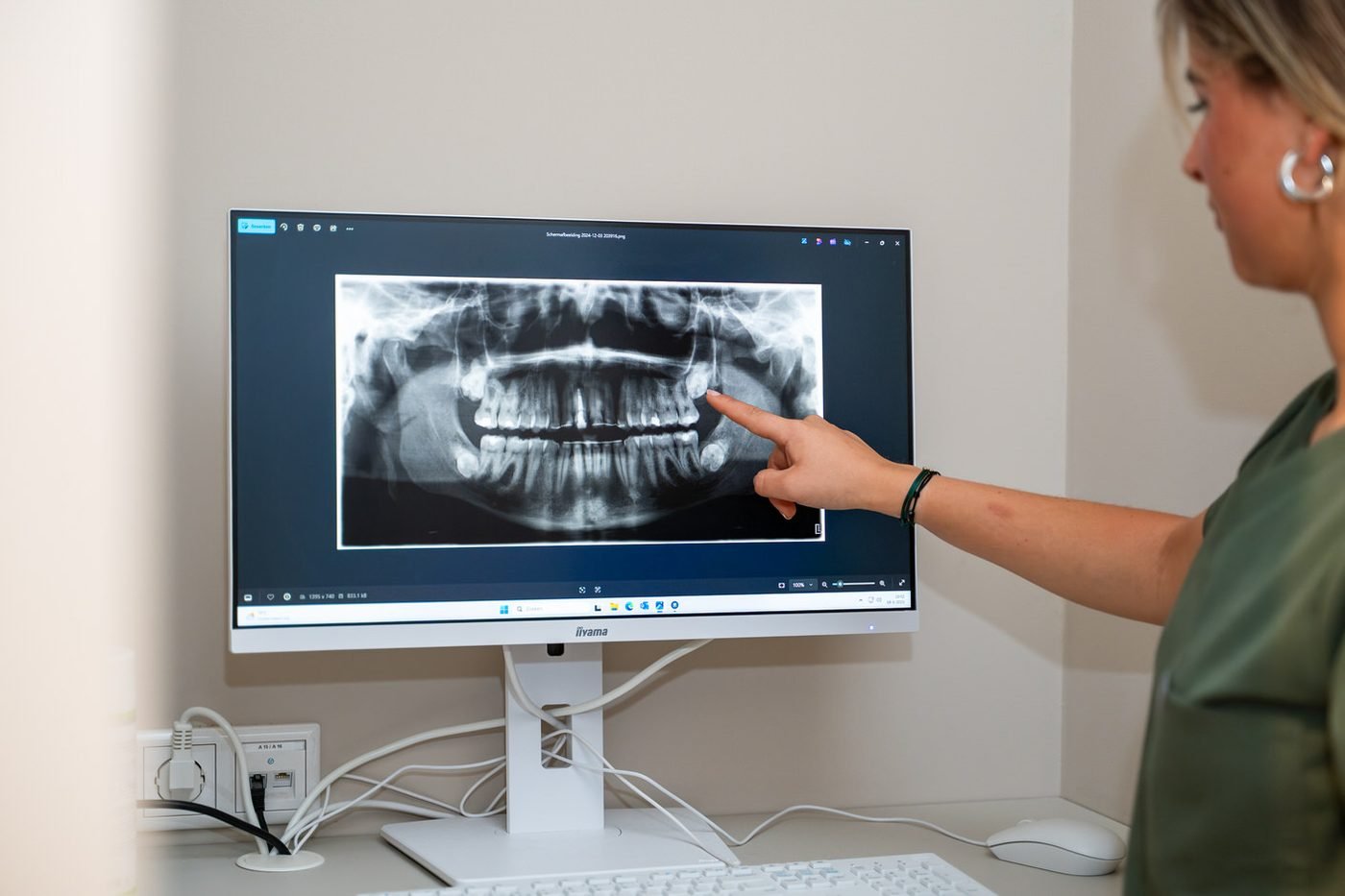
During our opening hours you call the practice. We then look at whether we can see you the same day. The earlier you call, the more room there is to fit something in.
Outside our opening hours the Tandartsenpost Eindhoven takes over. That is the regional out-of-hours dental service, and it exists for exactly these moments.
You go to the GP out-of-hours post or the hospital for anything that goes beyond the tooth itself: a blow to the head with dizziness or nausea, a wound that will not stop bleeding, or a jaw that no longer closes properly.
And to save you looking it up in a panic: we speak English. Many of our patients moved to Eindhoven for work or study, and an emergency call can be handled in English.
What happens after that
That depends on what is damaged.
A replaced tooth is usually splinted to the neighbouring teeth for a few weeks, so it can reattach quietly. A check-up follows, because sometimes a root canal treatment turns out to be necessary later.
A broken corner is built up with composite, in the same colour as your own tooth. With larger damage a crown comes into the picture.
And sometimes the answer is: do nothing for now and look again in two weeks. A tooth that has taken a knock sometimes just needs time.
Frequently asked questions
Can a knocked-out tooth still be put back?
Often yes, if it happens quickly. Within half an hour the chance of saving it is greatest. Keep the tooth in milk or in your cheek, never in water and never dry.
Can I put a knocked-out baby tooth back?
No. The permanent tooth is developing underneath and could be damaged. Do have it checked.
How do I store a knocked-out tooth?
In milk, or in the patient’s own cheek. Hold the tooth by the crown, not by the root, and do not scrub it clean.
Do I need to come in straight away for a small chip?
If there is pain or sensitivity, yes. A small flake without symptoms can wait until the next appointment, but do not leave a sharp edge for too long.
What if it happens outside opening hours?
Then the Tandartsenpost Eindhoven, the regional out-of-hours dental service, will help you.
I am not a patient at VLIJT. Can I still call?
Please do. We will look at what is possible and refer you on if we need to.
In closing
Most dental accidents look worse than they are. But with a knocked-out permanent tooth, speed is the only thing that really counts: milk, and call.
Want to know more about how our emergency care works? Read our emergency page, or see what is possible with crowns and bridges if more needs to be restored.
Not registered with us yet? You can sign up here.